Outdoor saunas: barrel, cabin and winter use
A sauna in the garden, by the lake or at the cabin is the Finnish ideal: heat, then cool off outside under the sky. It also brings its own questions: how to heat it, how to power it, and how long it takes when it is freezing out.
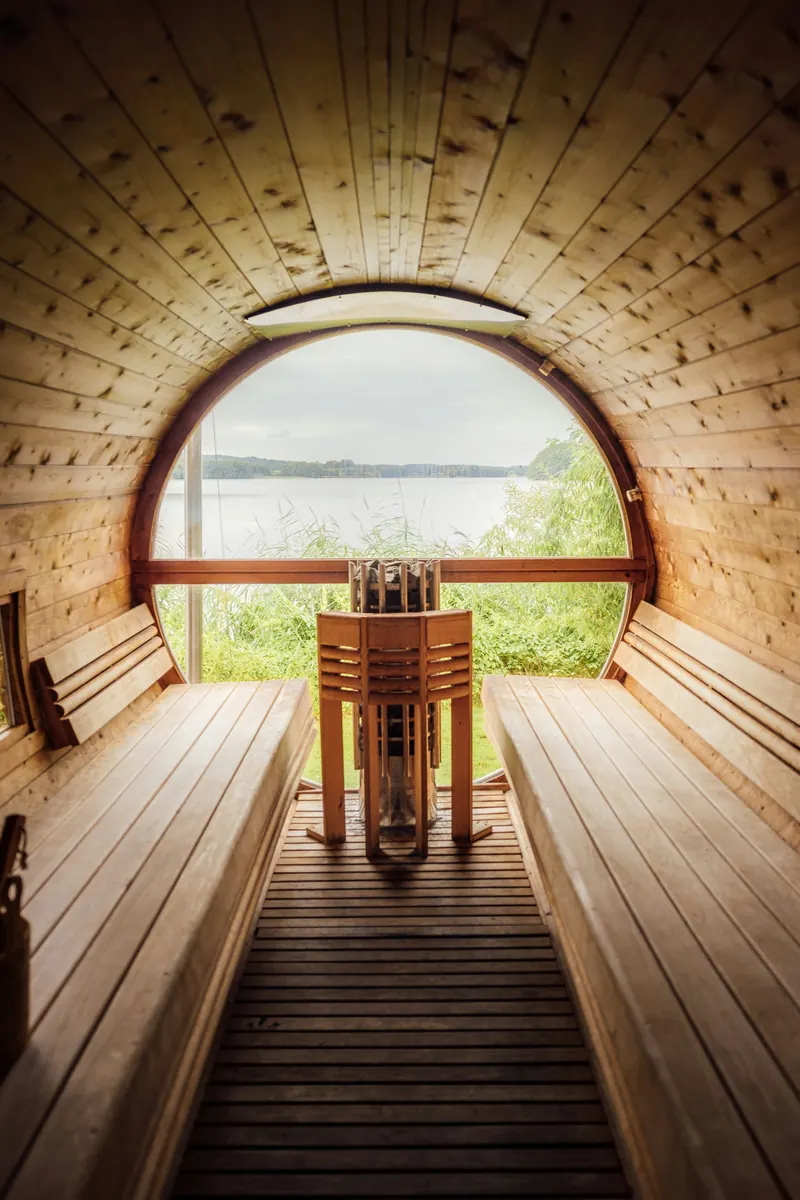
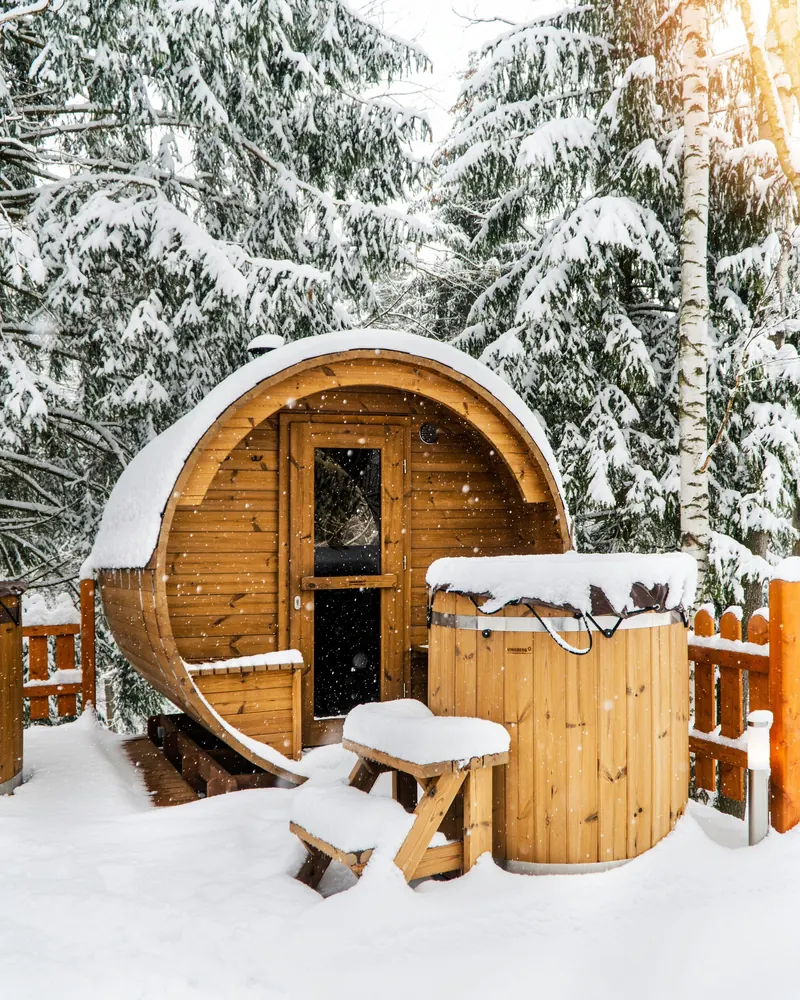
Barrel, cabin or pod
| Type | Good | Watch out for |
|---|---|---|
| Barrel | Quick to build from a kit, compact, the round shape heats a small volume. | The staves are the only wall, with no insulation, so it loses heat fast in the cold and needs more heater. Barrel heater size → |
| Insulated cabin | Holds heat well, warms faster in winter, room for a changing area and a porch. | More building work, and possibly a permit depending on size and where you live. |
| Cube or pod | Modern look, often with a big glass front. | Large glass areas lose heat; size the heater for the glass. |
How long it takes to heat in the cold
The colder it is outside, the longer the warm-up. The calculator's heat model, from the outside temperature to 80 °C (176 °F) at head height, with the recommended heater:
| Sauna | Summer, 20 °C | Autumn, 5 °C | Winter, −10 °C |
|---|---|---|---|
| Barrel, 6 ft across × 8 ft long 8 kW heater | 49 min $1.62 | 66 min $2.13 | 86 min $2.71 |
| Insulated cabin, 7 × 6 × 7 ft 8 kW heater | 48 min $1.41 | 62 min $1.81 | 78 min $2.25 |
Cost per session including one hour inside, at 17 cents per kWh. The uninsulated barrel uses noticeably more energy in winter than the insulated cabin of a similar size. Running cost calculator →
Electric or wood?
A wood stove needs no power line and suits a cabin or lakeside sauna perfectly; it also brings the crackle and smell that many Finns love. An electric heater is easier day to day, can run on a timer, and heats the same way every time. Both need the right size for a cold, often uninsulated room. Electric vs wood-burning →
Power for an electric heater
An outdoor sauna usually needs a new circuit run from the house: a buried or protected cable sized for the heater, plus a separate circuit for lights. Plan the route early and have a licensed electrician do the work. A 6–9 kW heater needs roughly a 40–50 A breaker at 240 V. Breaker sizes →
Wood stoves outdoors
- Keep the safety distances in the stove manual to walls, benches and the ceiling, and use the heat shields it specifies.
- Use a chimney certified for sauna stoves, and put a non-combustible plate under and in front of the stove on a wooden floor.
- Store dry wood under a roof. Wet wood heats poorly and smokes.
- Fit a smoke and carbon monoxide alarm in the changing room.
Practical details
- Foundation and drainage. Set the sauna on a level, well-drained base so water runs away and the floor stays off the ground.
- Ventilation. Fresh air in near the heater, exhaust low under the benches, both adjustable so you can close them during warm-up in winter. Ventilation calculator →
- Changing room. Even a small porch or dressing room makes winter use far nicer, and keeps the cold out of the hot room.
- Permits. Size and distance limits for garden buildings vary by place. Check local rules before you order a kit.
- Cooling off. A shower, a plunge tub or a lake nearby, and a bench outside. Sauna and cold water →